
Lymphatic Ultrasound
Seeing Your Lymphatic Pathways — Safely, Precisely, and Compassionately
Choosing to travel abroad for lymphedema surgery is a significant decision, often made after years of uncertainty.
At our clinic in Tokyo, lymphatic ultrasound is a key step in helping international patients gain clarity, confidence, and realistic options for treatment.
Lymphatic ultrasound is a specialized, non-invasive examination that allows us to directly visualize lymphatic vessels and veins inside your body, without radiation or contrast agents.
By carefully understanding your unique lymphatic anatomy before surgery, we can determine whether lymphaticovenular anastomosis (LVA) may be safely and appropriately considered.
If you have been told that “no further options are available,” we encourage you to consult with us.
A careful evaluation using lymphatic ultrasound may reveal possibilities that were not visible with previous examinations.
【Lymphatic Ultrasound】
Seeing Possibilities That May Not Have Been Visible Before
Choosing to travel abroad for lymphedema surgery is a significant decision, often made after years of uncertainty.
At our clinic in Tokyo, lymphatic ultrasound is a key step in helping international patients gain clarity, confidence, and realistic options for treatment.
Lymphatic ultrasound is a specialized, non-invasive examination that allows us to directly visualize lymphatic vessels and veins inside your body, without radiation or contrast agents.
By carefully understanding your unique lymphatic anatomy before surgery, we can determine whether lymphaticovenular anastomosis (LVA) may be safely and appropriately considered.
If you have been told that “no further options are available,” we encourage you to consult with us.
A careful evaluation using lymphatic ultrasound may reveal possibilities that were not visible with previous examinations.
【Lymphatic Ultrasound at Our Clinic】
What Is Lymphatic Ultrasound?
Lymphatic ultrasound uses ultra–high-frequency ultrasound technology to evaluate the lymphatic system in real time.
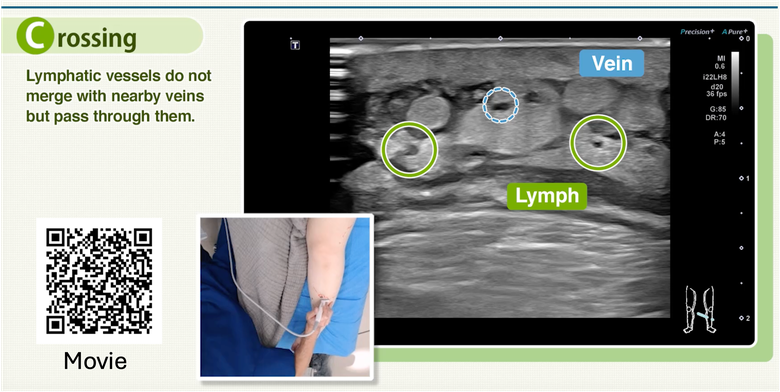
Unlike standard imaging, this examination allows us to observe individual lymphatic vessels, their size, depth, and condition, as well as their relationship to nearby veins and surrounding structures.
The examination is:
Non-invasive and painless
Free from radiation exposure
Performed without contrast agents
This makes it a safe and repeatable test, especially important for patients traveling from overseas.
【Why Lymphatic Ultrasound Is Essential for LVA Surgery】
LVA surgery depends on one crucial factor:
the presence and condition of lymphatic vessels that still remain in your body.
Because lymphatic vessels are extremely small and vary greatly between individuals, their precise identification before surgery is essential.
Lymphatic ultrasound allows us to:
Identify lymphatic vessels suitable for anastomosis
Understand their depth and accessibility
Plan surgery before making any incision
Avoid unnecessary tissue trauma
This careful planning supports a personalized and safety-focused surgical approach.
【Complementing Other Imaging Examinations】
Each imaging modality provides different information:
Lymphoscintigraphy shows overall lymphatic flow but lacks fine anatomical detail.
ICG lymphography clearly visualizes superficial lymphatic vessels, but only to a limited depth.
Lymphatic ultrasound has no depth limitation and enables direct visualization of both superficial and deep lymphatic vessels.
By integrating lymphatic ultrasound with other examinations when appropriate, we obtain a comprehensive and realistic understanding of your lymphatic system, which is especially valuable when treatment options are uncertain.
【A Safe Alternative for Patients with Contrast Allergies】
Some patients cannot undergo ICG lymphography due to a history of contrast-related allergic reactions.
In such cases, we combine lymphoscintigraphy and lymphatic ultrasound to identify lymphatic vessels and veins safely, without using contrast agents.
This ensures that evaluation and surgical planning remain accurate while prioritizing patient safety.
【Improving Surgical Safety Through Precise Identification】
Within fatty tissue, lymphatic vessels and nerves can appear very similar to the naked eye.
Accidental nerve injury may cause postoperative pain, numbness, or motor dysfunction.
By performing detailed lymphatic ultrasound before surgery, we can clearly distinguish:
Lymphatic vessels
Veins
Nerves
This preoperative knowledge significantly reduces the risk of nerve injury and contributes to a lower incidence of surgical complications.
【Experience That International Patients Can Rely On】
At our clinic:
Lymphatic ultrasound is performed directly by the surgeons, not delegated to technicians
We conduct over 1,000 lymphatic ultrasound examinations annually
Our experience is supported by extensive clinical research focused on lymphatic ultrasound
This integration of imaging, surgery, and research allows us to continuously refine our approach for the benefit of our patients.
【A Reassuring Message to Our International Patients】
Many of our international patients come to us after years of limited options and unanswered questions.
Our goal is not to promise outcomes, but to replace uncertainty with clear information, careful evaluation, and thoughtful guidance.
Lymphatic ultrasound helps us understand your lymphatic system as it truly is—so that any next step is taken with confidence and respect.
If you are considering treatment abroad and would like a careful, individualized assessment, we would be honored to support you.
Please feel free to contact us to learn whether consultation or evaluation may be appropriate for you.
【Frequently Asked Questions (FAQ)】
Lymphatic Ultrasound for International Lymphedema Patients
Q1. What is lymphatic ultrasound?
Lymphatic ultrasound is a specialized ultrasound examination that allows us to directly visualize lymphatic vessels and veins inside the body.
It is non-invasive, painless, and does not involve radiation or contrast agents.
This examination helps us understand your individual lymphatic anatomy in a precise and safe manner.
Q2. Why is lymphatic ultrasound important before LVA surgery?
Lymphaticovenular anastomosis (LVA) relies on one essential factor:
the presence and condition of lymphatic vessels that remain in your body.
Because lymphatic vessels are extremely small and differ greatly between individuals, careful identification before surgery is critical.
Lymphatic ultrasound allows us to:
Evaluate whether lymphatic vessels suitable for surgery are present
Understand their depth and accessibility
Plan surgery before any incision is made
Avoid unnecessary tissue trauma
This supports a personalized and safety-focused surgical approach.
Q3. How does lymphatic ultrasound differ from lymphoscintigraphy or ICG lymphography?
Each imaging method provides different information:
Lymphoscintigraphy
Shows overall lymphatic flow but lacks detailed anatomical precision.
ICG lymphography
Clearly visualizes superficial lymphatic vessels, usually within about 1 cm from the skin surface.
Lymphatic ultrasound
Has no depth limitation and enables direct visualization of both superficial and deep lymphatic vessels, as well as nearby veins.
When appropriate, these examinations are combined to achieve a more complete and realistic understanding of your lymphatic system.
Q4. I was told that no further treatment options are available. Should I still consider consultation?
Yes.
Some patients come to us after being told that no additional options are possible based on prior examinations.
Lymphatic ultrasound provides a different perspective by directly evaluating individual lymphatic vessels.
In some cases, this careful assessment reveals anatomical details that were not visible with previous tests.
Our goal is not to promise treatment, but to provide clarity and accurate information so that informed decisions can be made.
Q5. I have a history of contrast allergy. Can I still be evaluated safely?
Yes.
If you cannot undergo ICG lymphography due to a history of contrast-related allergic reactions, we can safely evaluate your condition using a combination of:
Lymphoscintigraphy
Lymphatic ultrasound
This allows us to identify lymphatic vessels and veins without using contrast agents, while maintaining a high level of safety.
Q6. Does lymphatic ultrasound help improve surgical safety?
Yes.
Within fatty tissue, lymphatic vessels and nerves can appear very similar to the naked eye.
Accidental nerve injury may lead to postoperative pain, numbness, or movement-related symptoms.
By performing lymphatic ultrasound before surgery, we can:
Clearly distinguish lymphatic vessels from veins and nerves
Plan surgical access more accurately
Reduce the risk of nerve-related complications
This preoperative understanding contributes to safer surgery.
Q7. Who performs the lymphatic ultrasound at your clinic?
At our clinic, lymphatic ultrasound examinations are performed directly by the surgeons themselves, not delegated to technicians.
This ensures that imaging findings are immediately and accurately integrated into:
Surgical planning
Clinical decision-making
Patient explanations
We perform over 1,000 lymphatic ultrasound examinations each year, reflecting extensive clinical experience.
Q8. Is lymphatic ultrasound painful or risky?
No.
Lymphatic ultrasound is:
Painless
Non-invasive
Free from radiation exposure
It is considered a very safe examination and can be repeated when clinically necessary.
Q9. How does lymphatic ultrasound benefit international patients traveling from overseas?
For international patients, lymphatic ultrasound offers important advantages:
Reduces uncertainty before surgery
Enables individualized surgical planning
Helps avoid unnecessary procedures
Supports efficient decision-making during a limited stay abroad
This is particularly valuable when time and travel logistics are major concerns.
Q10. Will the results be explained clearly to me?
Absolutely.
We believe that understanding your own condition is essential for peace of mind.
We take time to:
Show you the ultrasound images
Explain findings in clear, understandable language
Discuss how the results relate to possible next steps
Questions are always welcome.
Q11. I feel anxious about traveling abroad for treatment. Is that normal?
Yes—this is completely natural.
Choosing treatment in another country is a significant decision, and many patients feel uncertainty at first.
Our role is to replace that uncertainty with:
Careful, evidence-based evaluation
Clear communication
Respect for your individual situation
We aim to support you with clarity and compassion at every stage.
【A Message to Our International Patients】
Lymphedema is a long-term condition, and choosing where to seek care is deeply personal.
Through lymphatic ultrasound, we strive to understand your lymphatic system as it truly is, not as an assumption or a textbook model.
Our goal is not to promise outcomes, but to help you move forward with accurate information, thoughtful guidance, and confidence.
If you are considering treatment abroad and would like a careful, individualized evaluation, we would be honored to support you.
Please feel free to contact us with any questions.